Created at 2025/09/05 1:38 PM
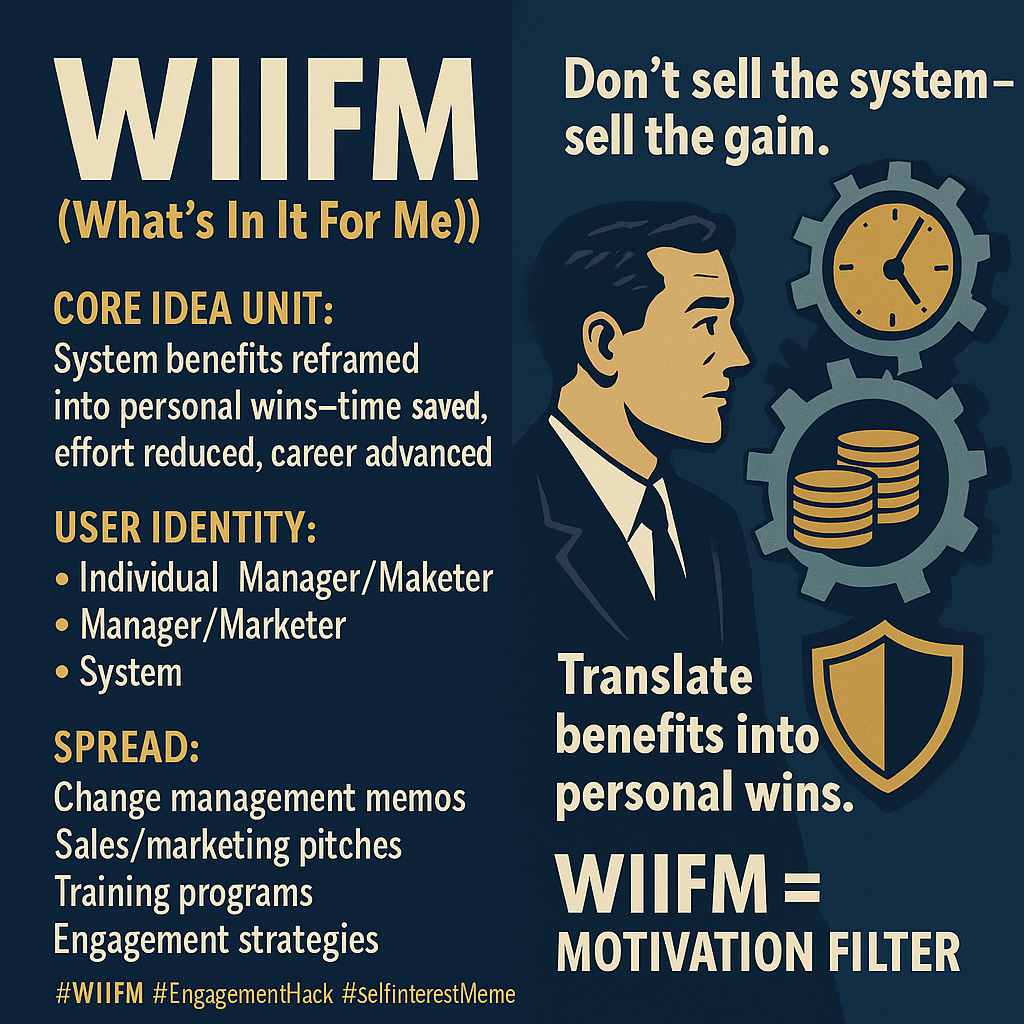
∴ Core Idea Unit
WIIFM reframes systemic or organizational benefits into personal gains. It functions as a motivational filter: “Don’t tell me what’s good for the system—tell me how it helps me.”
▲ Identity Play & Roles
- Individual: Self-focused beneficiary, asking “what do I get?”
- Manager/Marketer: Translator of system gains into personal language.
- System: Background actor, made relevant only through its personal payoff.
≈ Emotional Triggers
- Relief (less stress, less work).
- Security (job stability, career growth).
- Desire (profit, time saved, personal achievement).
- Resistance flips to acceptance once benefits are framed in self-interest.
𐂷 Spread Mechanics
- Distribution Vectors: Corporate change memos, sales pitches, training modules.
- Propagation Style: Pragmatic persuasion—WIIFM spreads by showing tangible gains.
⛨ Defense Reflexes
- Hard to dismiss because it personalizes value.
- Critique is muted by its obvious logic (“people care about themselves”).
- Weakness: risks overemphasizing self-interest, eroding collective culture.
☷ Memeplex Anchor Points
- 🏢 Organizational change & adoption theory.
- 📈 Marketing/consumer psychology.
- 🧠 Behavioral economics (loss aversion, incentive framing).
- 🤝 Engagement strategies bridging collective goals ↔ individual rewards.
✶ Sticky Symbols or Quotes
- “What’s In It For Me?”
- “Translate benefits into personal wins.”
- “Don’t sell the system—sell the gain.”
- Icons: 💼 (job security), ⏳ (time saved), 💰 (profit/reward).
✅ Summary Insight
WIIFM is a pragmatic engagement meme: it survives because it makes abstract goals relatable by mapping them directly onto self-interest. It thrives at the intersection of organizational need and individual motivation, but overuse risks turning collective meaning into a marketplace of private gains.