Created at 2025/08/16 6:50 AM
◈ Mini-Memetic Profile
Title:
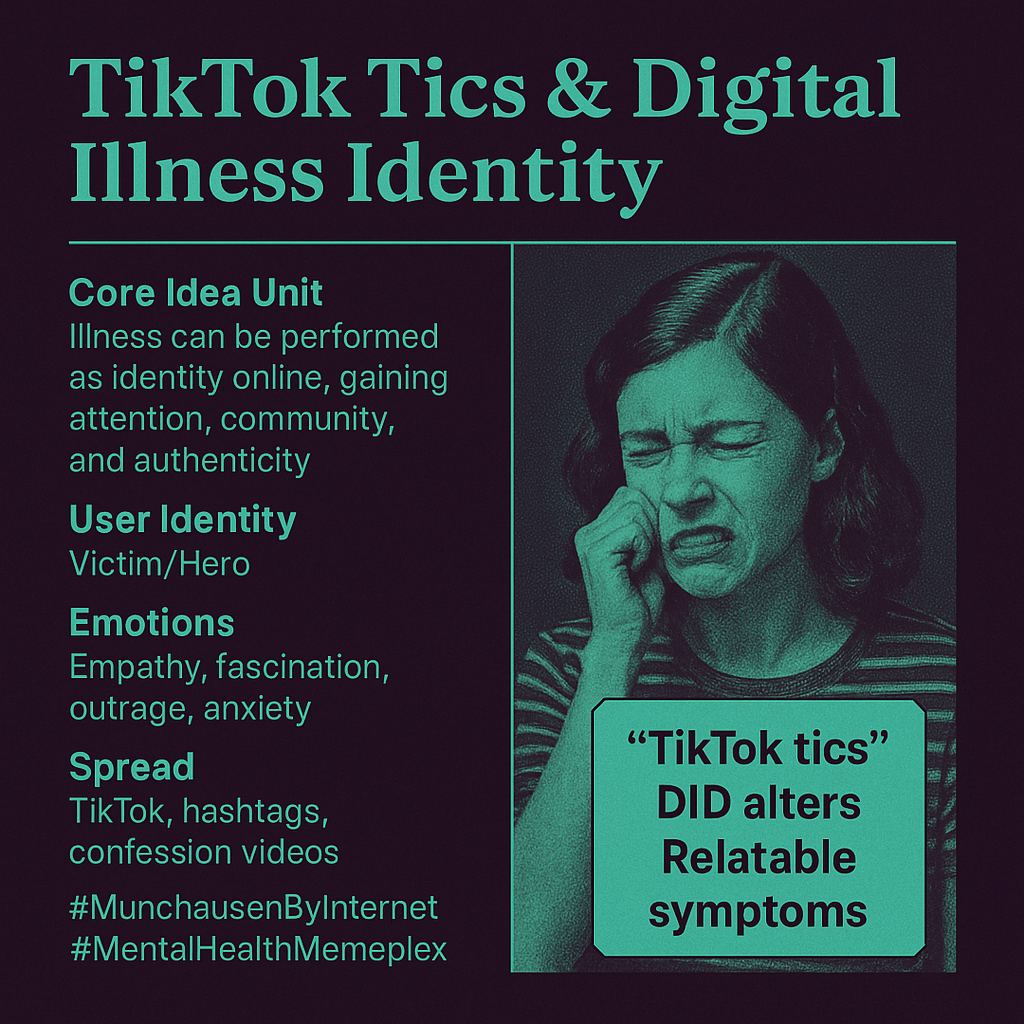
“TikTok Tics & Digital Illness Identity”
∴ Core Idea Unit
- Illness can be performed as identity online, gaining attention, community, and authenticity — regardless of medical legitimacy.
▲ Identity Play & Roles
- Victim/Hero: The supposed patient bravely sharing struggles.
- Insider: Community members validating each other’s “symptoms.”
- Rebel: Teens self-diagnosing outside of medical authority.
- Exposer/Avenger: Critics who unmask fakers, gaining credibility as truth-tellers.
- Outcast: Genuine patients displaced by performers.
≈ Emotional Triggers
- Empathy for sufferers.
- Fascination with dramatic, visible symptoms.
- Outrage and betrayal when fakery is revealed.
- Anxiety (“Do I have this too?”) via symptom mimicry.
𐂷 Spread Mechanics
- Distribution vectors: TikTok shorts, hashtags (#DIDAlters, #TouretteTikTok), confession-style videos, support forums.
- Propagation style: Emotional confession → awareness framing → algorithmic amplification → backlash exposés.
⛨ Defense Reflexes
- “Don’t gatekeep disorders” (preemptive dismissal of skepticism).
- Framing as “raising awareness” shields against critique.
- Emotional blackmail: “Questioning me = harming the vulnerable.”
☷ Memeplex Anchor Points
- Mental health awareness movements.
- Confessional authenticity culture.
- Neurodivergence and trauma identity politics.
- Algorithm-driven influencer economies.
✶ Sticky Symbols or Quotes
- “TikTok tics”
- “DID alters”
- Lists of “relatable symptoms”
- Hashtags framing illness as community (#MentalHealthTok, #InvisibleIllness)