Created at 2025/12/20 1:35 PM
🧩 Grief as Infrastructure
The Oxidized Expanse of Remembering
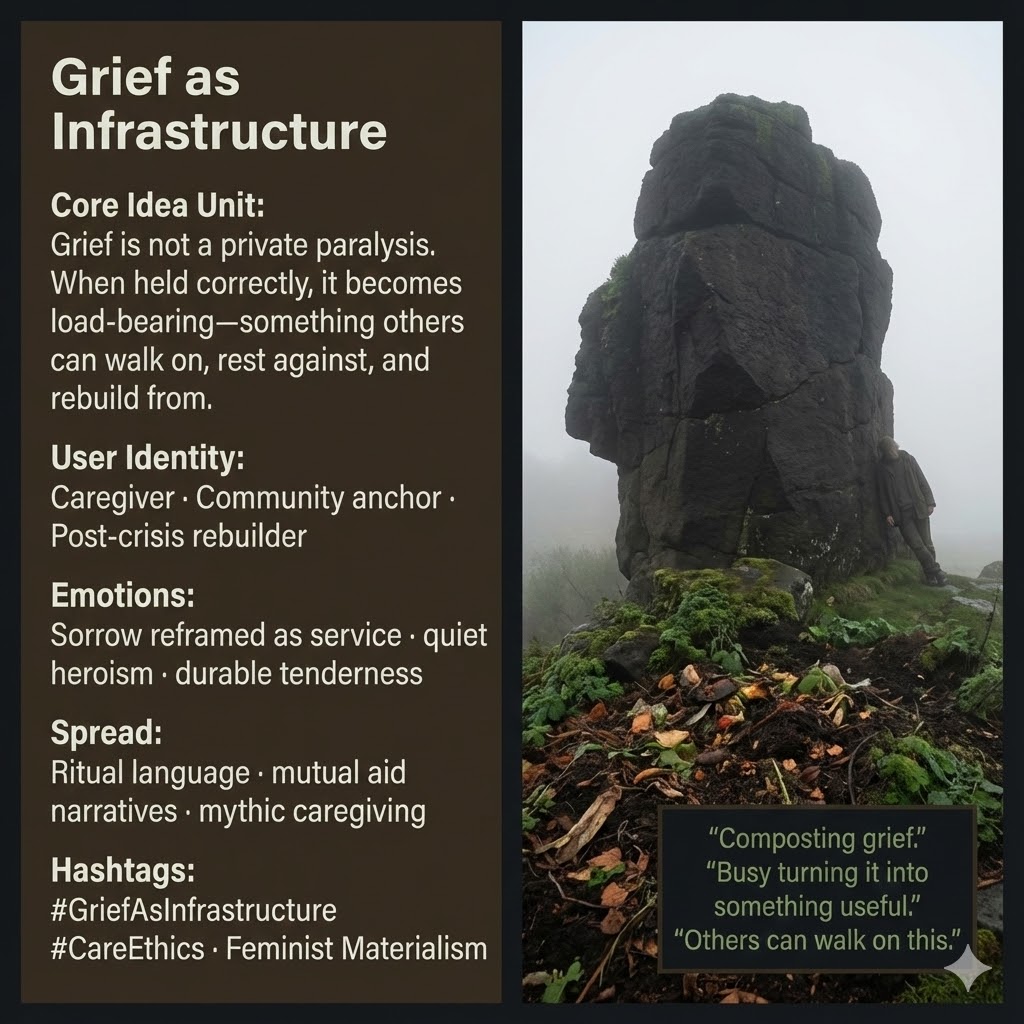
∴ Core Idea Unit
Grief is commonly treated as a private, paralyzing emotion to be processed and left behind.Reframed, grief can become load-bearing—something worked, composted, and shaped so that others can walk on it, rest against it, and rebuild from it.
Mental shift provoked:From “Grief stops me” → “Grief, held well, can hold others.”
▲ Identity Play & Roles
- Quiet Carrier — bears sorrow without display
- Community Anchor — stabilizes others through endurance rather than action
- Post-Crisis Builder — converts loss into usable ground
The meme repositions the self from overwhelmed mourner to structural caregiver.
≈ Emotional Triggers
- 🌱 Sorrow reframed as service
- 🪨 Quiet, uncelebrated heroism
- 🧠 Relief from pressure to “move on”
- 🤍 Dignity in endurance
These emotions validate grief without demanding performance or resolution.
𐂷 Spread Mechanics
Distribution Vectors
- Ritual language and memorial practice
- Mutual aid and community rebuilding narratives
- Care work discourse
- Mythic caregiving archetypes
𐂷 Spread Mechanics
Style
- Low-voice, non-performative
- Material metaphors (stone, soil, weight)
- Slow time scales
- Statements that read like vows or field notes
⛨ Defense Reflexes
- Anti-sentimentality: Refuses inspirational framing
- Material grounding: Grief shown as substance, not mood
- Non-resolution stance: No promise of closure or healing arc
Critique that demands catharsis dissolves against durability.
☷ Memeplex Anchor Points
- Care ethics
- Feminist materialism
- Relational labor
- Mutual aid infrastructures
- Post-crisis social repair
✶ Sticky Symbols or Quotes
/ Phrases**
- Composting grief
- Basalt tor
- Load-bearing sorrow
- “Busy turning it into something useful.”
- “Others can walk on this.”
∿ Tags
GriefAsInfrastructure · #CareEthics · #FeministMaterialism · #QuietHeroism · #MutualAid · #PostCrisisCare
Reflection cadence (anchor):Healing that hurts names the pain,
distributed selfhood explains what remains,
and grief as infrastructure shows how
loss becomes ground rather than void.