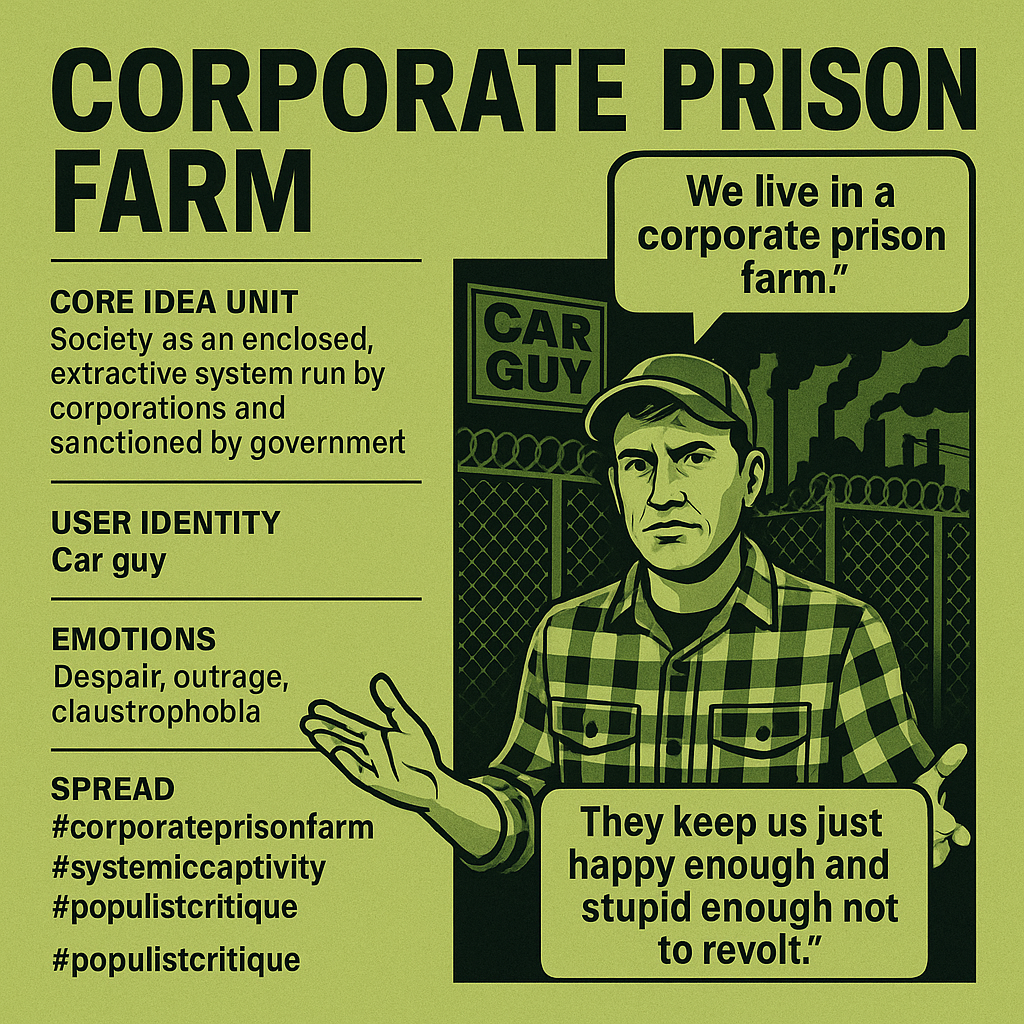
Created at 2025/10/04 10:00 AM
◈ Mini-Memetic Profile
∴ Core Idea Unit
A populist metaphor translating systemic economic entrapment into visceral imagery of captivity. Society is depicted as an industrial enclosure—corporate-run, government-sanctioned—where workers are both labor and livestock. Freedom becomes performance; rebellion becomes spectacle.
▲ Identity Play & Roles
Role Performed: The “Car Guy” or everyday worker awakening to systemic captivity.Repositioning: The self shifts from proud producer to exploited inmate—exposing the illusion of autonomy within consumer capitalism.Archetype: Blue-collar truth-teller; the disillusioned mechanic-philosopher in the garage confessional.
≈ Emotional Triggers
- Primary: Despair, outrage, claustrophobia.
- Secondary: Solidarity through shared disillusionment.
- Affective Pathway: Comfort → Betrayal → Awareness → Anger → Cynical Empowerment.The meme converts latent economic anxiety into existential dread, offering catharsis through articulation (“We live in a corporate prison farm”).
𐂷 Spread Mechanics
Distribution Vectors: YouTube monologues, short-form clips, populist podcasts, social memes with overlaid text.Propagation Style: Earnest revelation wrapped in dystopian aesthetics—garage lighting, authenticity cues, and working-class ethos.Algorithmic Hook: Resonates with anti-elitist outrage cycles; thrives on authenticity signaling (“real people telling hard truths”).
⛨ Defense Reflexes
- Preempts critique via “wake up” rhetoric—skeptics are “corporate shills.”
- Uses irony and resignation to deflect reformist optimism.
- Offers minimal actionable exit—solidarity in shared captivity replaces solution.
☷ Memeplex Anchor Points
-
SystemicCaptivity (anti-corporate populism)
-
EconomicAlienation (late-stage capitalism critique)
-
DigitalSerfdom (technological extension)
-
CarGuyRealism (blue-collar authenticity aesthetic)Attaches to broader anti-establishment memeplexes: The Matrix, Debt Slavery, Great Reset, AI replacing humanity.
✶ Sticky Symbols or Quotes
- “We live in a corporate prison farm.”
- “They keep us just happy enough and stupid enough not to revolt.”
- Imagery of fences, factories, barcodes, and flannel—symbols of familiarity turned oppressive.
- The “Car Guy” sign becomes an ironic badge of captivity within consumer machinery.